
A family owned company since, 1968, we specialise in the design & construction of award winning tennis courts.
Melbourne | Geelong | Sorrento
Melbourne
Geelong
Sorrento
Services
Since 1973 our Kevin McNamara has forged an enviable reputation as Australia's premier tennis court construction company.
A founding member of the Sports Contractors Association, the company has won an unprecedented 45 Tennis Court of the Year awards since 1993.
Our client list includes 3 Wimbledon Champions-Pat Cash, John Newcombe & Ken Rosewall along with John Fitzgerald, Anne Minter & hundreds of satisfied home & club court owners.
Did you know we also design and build pools and landscapes? Learn more
History

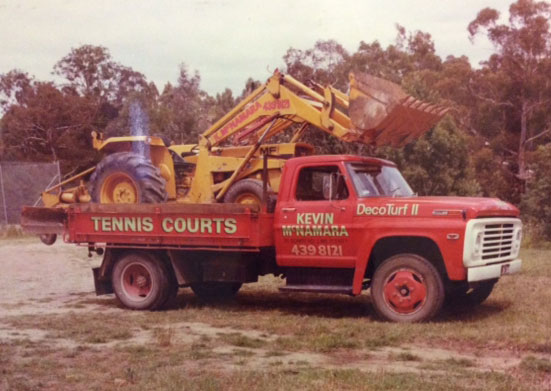
Kevin McNamara (View Resume) commenced his landscape design and construction business in 1968 and by 1973 that business had grown to incorporate tennis court construction. As the demand for home tennis courts grew Kevin encouraged clients to allow him to build courts that became a part of their garden landscape, often incorporating features such as natural stone retaining walls and draw curtain as a substitute for fixed fencing.
Did you know we also design and build pools and landscapes? Learn more
-
Our Projects
Casey Tennis Courts - Tennis Court -
Our Projects
Watsonia Tennis Club - Plexicushion Tennis Courts -
Our Projects
St Kevin's College Toorak - Multi Use Courts -
Our Projects
Tennis Court Eltham -
Our Projects
Tennis Court Mt Eliza -
Our Projects
Tennis Court Hawthorn -
Our Projects
Tennis Court -
Our Projects
Tennis Court Toorak -
Our Projects
Tennis Court Gisborne -
Our Projects
Tennis Court Caulfield -
Our Projects
Tennis Court Mt Eliza -
Our Projects
Tennis Court Leopold -
Our Projects
Tennis Courts Woodend
Awards

Sports Contractors Association Awards
-
2014
Winner - Tennis Court(s) above $100,000
Winner & Runner up - Tennis Court(s) up to $100,000 -
2013
Winner & Runner up - Tennis Court(s) above $100,000
Runner up - Tennis Court(s) up to $100,000 -
2012
Winner & Runner up - Tennis Court(s) above $100,000
Winner & Runner up - Tennis Court(s) up to $100,000 - ... and more
We'd love to hear from you.
-
Send us an email
info@courtsandpools.com.au -
Drop us a line
Head Office: +61 3 9315 1123
Geeling: +61 3 5224 2279
Sorrento: +61 3 5985 3820 -
Come and say hello
Unit 18, 75 Endeavour Way
Sunshine West VIC 3020
View on map
Copyright ©2014 McNamara Pools Courts Landscapes, All Rights Reserved. Developed by DCODE.